Fertilizer for Tomato Plant: Organic Feeding Schedule for Pots
Tomatoes need steady feeding, not one rescue dose. Use this stage-by-stage vermicompost routine for pots and grow bags.
By Sarvada Farm Team
From Sarvada Organic's farm team, based on small-batch vermicompost production and Indian balcony-garden support since 2018.
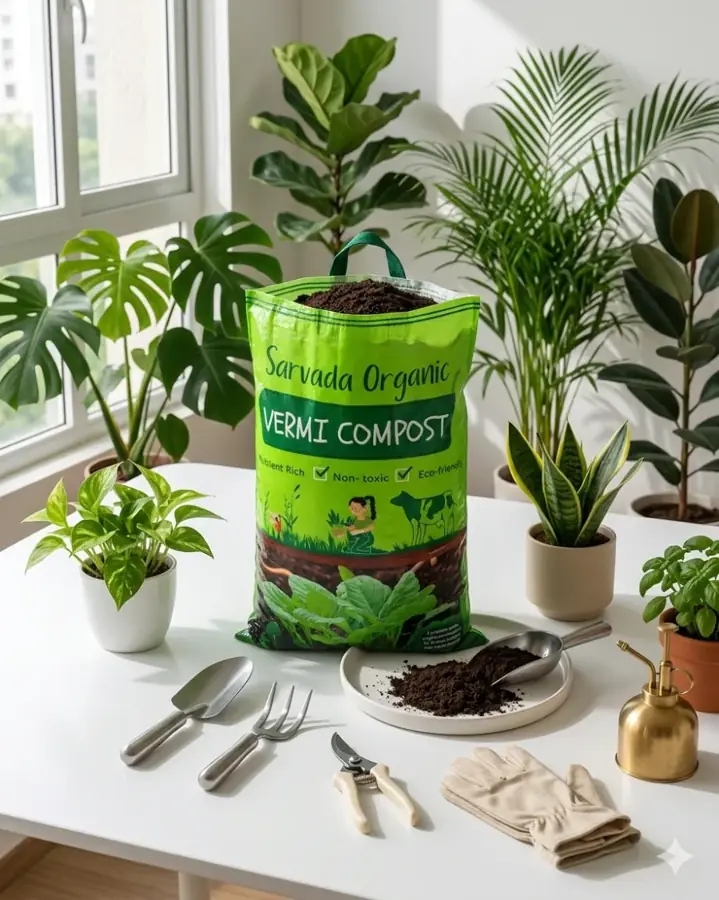
For tomato plants in Indian pots, the best fertilizer is a steady routine, not one strong dose. Start with an airy potting mix, add vermicompost before planting, then top dress every 20-30 days once the plant begins flowering.
Tomatoes are hungry, but they are also dramatic. Too little food gives pale leaves and weak fruiting. Too much food gives a leafy plant that behaves like it forgot the tomato part. Feed it like a marathon runner, not like a phone on fast charge.
At Sarvada, tomato advice usually starts with the pot, not the packet: a tomato in tight, wet soil cannot use even good organic fertilizer properly.
Tomato feeding rule
Best fertilizer for tomato plant in pots
In home pots, tomato plants need three things together: loose soil, regular organic food and enough sun. Vermicompost is a good starting point because it feeds gently and improves the soil around roots.
University of Maryland Extension treats tomato success as a full growing system: soil, planting, support, water and disease prevention all matter. That is why fertilizer alone cannot save a tomato plant in a tiny pot, dark corner or sticky soil.
| Stage | What to do | How much | Watch for |
|---|---|---|---|
| Before planting | Mix vermicompost into potting mix | 2 scoops in every 10 scoops mix | Mix should still feel airy |
| First 2 weeks | Do not add extra fertilizer | Only water when needed | Let roots settle |
| Vegetative growth | Light top dressing | Half teacup for a 12-inch pot | Deep green leaves, firm stem |
| Flowering starts | Regular top dressing | 1 teacup every 20-30 days | Flowers should not drop heavily |
| Fruiting | Continue feeding if drainage is good | 1 teacup every 20-30 days | Even watering matters most |
| Monsoon or wet soil | Reduce dose | Half dose | Avoid fungus gnats and root rot |
Use the right tomato potting mix first
A tomato plant in a pot needs more root room than most beginners expect. Use a 12-inch pot as the minimum. Choose an 18-inch grow bag if you want a stronger harvest. Fertilizer works better when roots can breathe.
| Ingredient | Amount | Job |
|---|---|---|
| Garden soil or red soil | 3 scoops | Mineral base and weight |
| Cocopeat | 3 scoops | Moisture holding |
| Vermicompost | 2 scoops | Slow organic food |
| Leaf mould or composted manure | 1 scoop | Organic matter |
| Rice husk, perlite or coarse sand | 1 scoop | Drainage and air |
For more mix options, use the potting mix recipe guide. For exact feeding quantities by pot size, use the vermicompost dose guide.
How to apply vermicompost to tomato plants
- Water lightly if the topsoil is very dry.
- Loosen the top finger-depth of soil without cutting roots.
- Spread the measured vermicompost in a ring away from the stem.
- Mix only the top layer gently.
- Water once so the compost settles.
- Mulch with dry leaves in summer to keep moisture steady.
What tomatoes need besides fertilizer
- Sun: 6-8 hours of direct light is ideal.
- Support: add a stake or cage before the plant becomes heavy.
- Water: keep moisture even; do not swing from bone dry to flooded.
- Air: avoid overcrowding leaves against walls or other pots.
- Mulch: dry leaves or coco chips reduce summer stress.
If your tomato plant has leaves but no fruit
Do not immediately add more fertilizer. First check sunlight. A tomato in weak light may grow leaves but fail to flower properly. Next check nitrogen. Too much rich food can push leaf growth at the cost of flowering.
If the plant is very leafy, pause feeding for 2-3 weeks, give it more sun if possible, and keep watering even. When flowers return, restart with a smaller vermicompost dose.
If flowers are falling
Flower drop is often stress, not hunger. Heat, irregular watering, low sunlight, strong wind, or a pot drying out too often can all cause it. Feeding more during stress usually makes the pot wetter and heavier.
- Water deeply and evenly instead of sprinkling daily.
- Mulch during hot weeks.
- Move the pot where it gets morning sun and some harsh-afternoon relief.
- Use half-dose vermicompost during monsoon or cloudy weeks.
When chemical tomato fertilizer may help
Organic fertilizer is a good base, but some problems need targeted correction. If leaves show a clear deficiency pattern, or if blossom-end rot appears repeatedly even with steady watering, a specific nutrient treatment may be needed. Do not guess with strong fertilizer. Diagnose first.
Sarvada note
If your plant is already stressed, read the tomato plant recovery guide before adding more food. If the plant is healthy and fruiting, compare Sarvada vermicompost packs for regular feeding.
Frequently asked questions
Use vermicompost as the base organic fertilizer. Mix it into the potting mix before planting, then top dress every 20-30 days after flowering starts.
A 12-inch tomato pot needs about 1 teacup as top dressing every 20-30 days during flowering and fruiting. Use half dose if the pot stays wet.
Use only well-rotted cow dung manure, preferably in outdoor beds or as a small part of the potting mix. Do not use fresh cow dung in tomato pots.
Common causes are low sunlight, excess nitrogen, poor pollination, heat stress or an undersized pot. Check sun and watering before adding more fertilizer.
Feed lightly during early growth, then every 20-30 days after flowering starts. Keep watering steady because tomatoes react badly to sudden dry-wet cycles.
Use 3 scoops soil, 3 scoops cocopeat, 2 scoops vermicompost, 1 scoop leaf mould or composted manure and 1 scoop rice husk, perlite or coarse sand.
Try Sarvada Organic
Pure vermicompost from ₹249 · Lab N 3.16%
No silt, no preservatives. Free delivery above ₹499 and Cash on Delivery on Amazon.
Buy on Amazon