Vermiwash: What It Is and How to Dilute It
Use 1 cap vermiwash with 10 caps water for most plants. Here is the spray-bottle, spoon and soil-drench guide.
By Sarvada Farm Team
From Sarvada Organic's farm team, based on small-batch vermicompost production and Indian balcony-garden support since 2018.
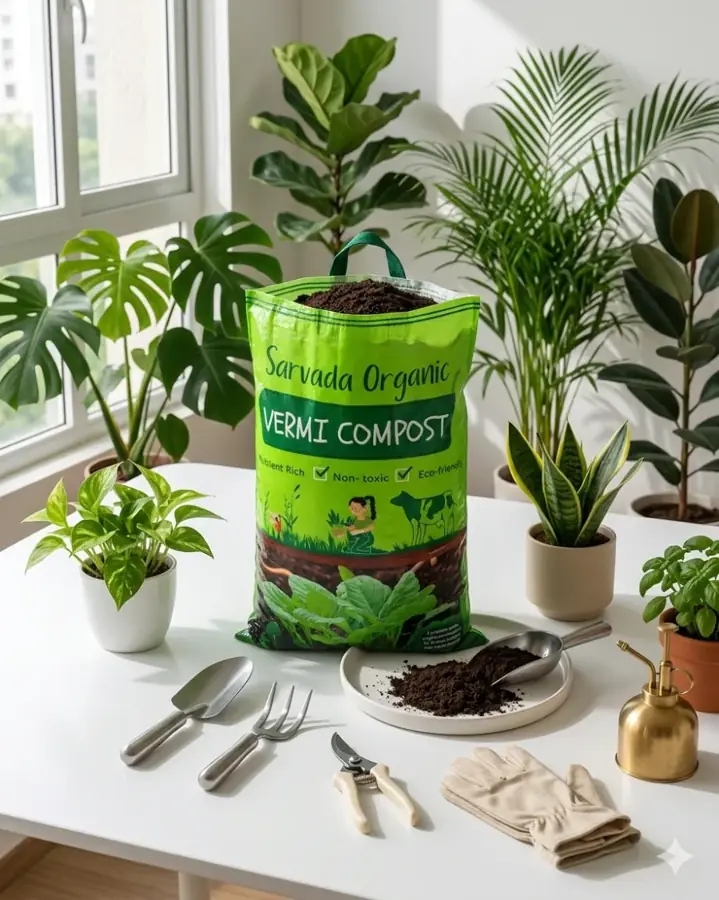
Vermiwash is the brown liquid collected from a vermicompost bed. Dilute it before it touches a plant: 1 cap vermiwash with 10 caps water for normal plants, or 1 cap with 20 caps water for seedlings. Spray in the early morning or evening until leaves look lightly misted, not dripping.
Think of vermicompost as the meal and vermiwash as the quick drink. Vermicompost feeds slowly through the soil. Vermiwash is useful when a plant needs a gentle leaf spray or a light soil drink without the shock of chemical fertilizer.
Fast dilution
What vermiwash actually is
When clean water passes slowly through a vermicompost bed, it carries tiny amounts of soluble nutrients, humic substances and microbes from the worm castings. Do not expect a thick fertilizer. Good vermiwash is closer to a light compost tea.
Good vermiwash should smell earthy, not rotten. It should look like weak tea or thin black coffee. If it smells sour, alcoholic or sewage-like, do not spray it on leaves.
How to dilute vermiwash without measuring equipment
Use the same cup, cap or spoon for both liquids. That is all a ratio means. One bottle cap of vermiwash gets 10 bottle caps of water. One tablespoon gets 10 tablespoons of water.
| Use case | Household measure | How strong |
|---|---|---|
| Normal foliar spray | 1 cap vermiwash + 10 caps water | Standard gentle spray |
| 1 litre spray bottle | Half teacup vermiwash, rest water | Good for most home plants |
| Seedlings | 1 cap vermiwash + 20 caps water | Very mild |
| Tender indoor plants | 2-3 tablespoons in 1 litre water | Safer first spray |
| Soil drench | Half teacup diluted mix per medium pot | Pour near the edge of the pot |
How to use vermiwash as a leaf spray
- Dilute fresh. Mix only what you will use that day.
- Spray before 10 AM or after 5 PM. Do not spray hot leaves in afternoon sun.
- Mist both sides of the leaves. Stop when the leaves look damp. They should not drip.
- Repeat weekly during active growth. For slow indoor plants, once every 15 days is enough.
- Watch one leaf first. For a new plant, spray a small patch and wait a day before spraying the full plant.
How to use vermiwash as a soil drench
A soil drench means pouring the diluted vermiwash into the pot instead of spraying leaves. Use this for indoor foliage, succulents, or plants that do not like wet leaves. Pour half a teacup of diluted mix around the edge of a medium pot, not directly on the stem.
| Plant type | Best method | How often |
|---|---|---|
| Methi, spinach, coriander | Mild leaf spray | Once a week after true leaves appear |
| Tomato and chilli | Leaf spray during flowering | Once every 7-10 days |
| Rose, hibiscus, jasmine | Leaf spray | Once a week in active growth |
| Money plant, pothos, peace lily | Soil drench | Once every 15 days |
| Succulents and cacti | Very mild soil drench | Once a month, only if growing |
| Seedlings | Very mild mist | Once every 7-10 days |
When vermiwash helps most
- After transplant shock - wait 3-4 days, then use a very mild spray.
- During flowering - tomatoes, chillies and flowering plants respond well to gentle weekly support.
- For dull leaves - indoor foliage often looks fresher after a mild soil drench.
- For leafy greens - spray lightly after the first true leaves, never on the day you harvest.
Common mistakes
- Spraying undiluted - even organic liquids can stress tender leaves when used too strong.
- Spraying at noon - droplets on hot leaves can leave burn marks.
- Mixing with neem oil - use neem and vermiwash on separate days.
- Storing diluted mix - mix fresh and use the same day.
- Using it on sick leaves - black spots, mildew and rot need disease care first.
Can you make vermiwash at home?
Yes, if you already keep a healthy vermicompost bin. Place a tray under the bin, pour clean water slowly through the compost bed, collect the brown liquid that drains out, dilute it, and use it the same day. Do not store homemade diluted vermiwash for later.
Sarvada note
Frequently asked questions
Vermiwash is the brown liquid collected from a vermicompost bed after water passes through worm castings. It contains small amounts of soluble nutrients, humic substances and microbes.
Use 1 cap vermiwash with 10 caps water for most plants. For seedlings and tender indoor plants, use 1 cap with 20 caps water or 2-3 tablespoons in a 1 litre spray bottle.
For normal plants, add about half a teacup of vermiwash and fill the rest of the bottle with water. For seedlings, use only 2-3 tablespoons.
Yes, after dilution. Spray early morning or evening, mist both sides of the leaves, and stop before the leaves start dripping.
Yes. Use diluted vermiwash as a soil drench for indoor plants or plants that dislike wet leaves. Half a teacup of diluted mix is enough for a medium pot.
Use them on separate days. Neem oil is for pest pressure, while vermiwash is for gentle nutrition and soil or leaf support.
Use it once a week for active vegetables and flowering plants. For indoor foliage, once every 15 days is enough. For succulents, use it rarely and only as a mild soil drench.
Try Sarvada Organic
Pure vermicompost from ₹249 · Lab N 3.16%
No silt, no preservatives. Free delivery above ₹499 and Cash on Delivery on Amazon.
Buy on Amazon